If you are in distress, you can call or text 988 at any time. If it is an emergency, call 9-1-1 or go to your local emergency department.
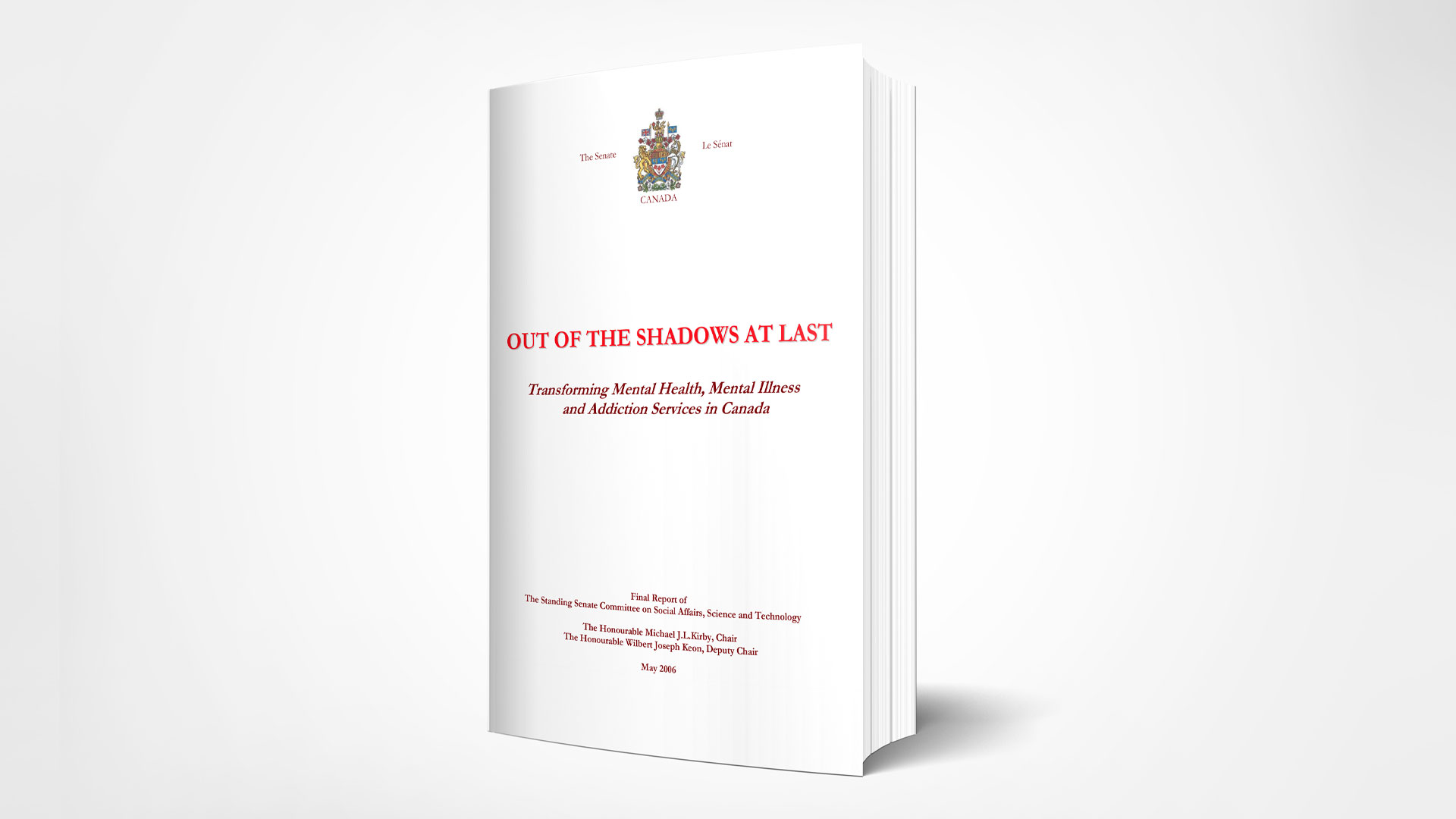
In More for the Mind, a study of psychiatric services in Canada, the Canadian Mental Health Association said: In no other field, except perhaps leprosy, has there been as much confusion, misdirection and discrimination against the patient, as in mental illness… Down through the ages, they have been estranged by society and cast out to wander in the wilderness. Mental illness, even today, is all too often considered a crime to be punished, a sin to be expiated, a possessing demon to be exorcised, a disgrace to be hushed up, a personality weakness to be deplored or a welfare problem to be handled as cheaply as possible. These words were written nearly half a century ago. Yet the more than two thousand personal stories submitted to the Standing Senate Committee on Social affairs, Science and Technology by Canadians living with mental illness, and their families, make clear that these words continue to ring true. It was difficult emotionally for Committee members to hear these stories. Listening to them, and reading them, had a profound effect on every one of us. As the months passed, they began to tear at our souls. Committee members could relate to these stories because of their own personal experiences. Like any group of a dozen Canadians, we too have experienced the impact of mental illness in our families: a sister-in-law who has schizophrenia, a nephew who committed suicide, a daughter who battled anorexia for several years, a sister who lives with severe depression and has been in and out of psychiatric hospitals frequently; it is rare that a family has not been affected. Indeed, it is this personal experience that has caused Committee members to regard our work on this report as much more than just another policy study: to us, it is truly a calling. We know how difficult it will be to improve the lives of people living with mental illness. We know it will be tougher still to change deep-seated public attitudes and reduce the stigma and discrimination they face. To put each of them on the road to recovery will be an extraordinary challenge. Yet we are optimistic that the time has come when meaningful change can, and will, be made. From coast to coast we have met politicians, government officials, mental health service providers and professionals, and many, many ordinary Canadians, who are willing to help make change a reality, to help bring people living with mental illness into the mainstream of Canadian society. We ask the readers of this report to join with us as, together, we work to transform mental health, mental illness and addiction services in Canada and to bring mental illness Out of the Shadows at Last.

SHARE THIS PAGE
Review our Assessment Framework for Mental Health Apps — a national framework containing key standards for safe, quality, and effective mental health apps in Canada.
To help expand the use of e-mental health services, we developed four online learning modules based on our Toolkit for E-Mental Health Implementation, in collaboration with the Centre for Addiction and Mental Health (CAMH).
Stepped Care 2.0© (SC2.0) is a transformative model for organizing and delivering evidence-informed mental health and substance use services.


We use cookies and similar technologies to make this website work, understand site usage, and improve your experience. You can accept all cookies, or reject non-essential cookies.
Manage your cookie preferences below:
Essential cookies enable basic functions and are necessary for the proper function of the website.
These cookies are needed for adding comments on this website.
Google Tag Manager simplifies the management of marketing tags on your website without code changes.
Statistics cookies collect information anonymously. This information helps us understand how visitors use our website.
Google Analytics is a powerful tool that tracks and analyzes website traffic for informed marketing decisions.
Service URL: policies.google.com (opens in a new window)
Clarity is a web analytics service that tracks and reports website traffic.
Service URL: clarity.microsoft.com (opens in a new window)
Marketing cookies are used to follow visitors to websites. The intention is to show ads that are relevant and engaging to the individual user.
LinkedIn Insight is a web analytics service that tracks and reports website traffic.
Service URL: www.linkedin.com (opens in a new window)
Pinterest Tag is a web analytics service that tracks and reports website traffic.
Service URL: policy.pinterest.com (opens in a new window)